

Tel Aviv [Israel], June 8 (ANI): Amid intensifying military engagements in West Asia, the top leadership of the Israel Defence Forces (IDF) has been actively directing military operations against Iran from their central operational command hub.
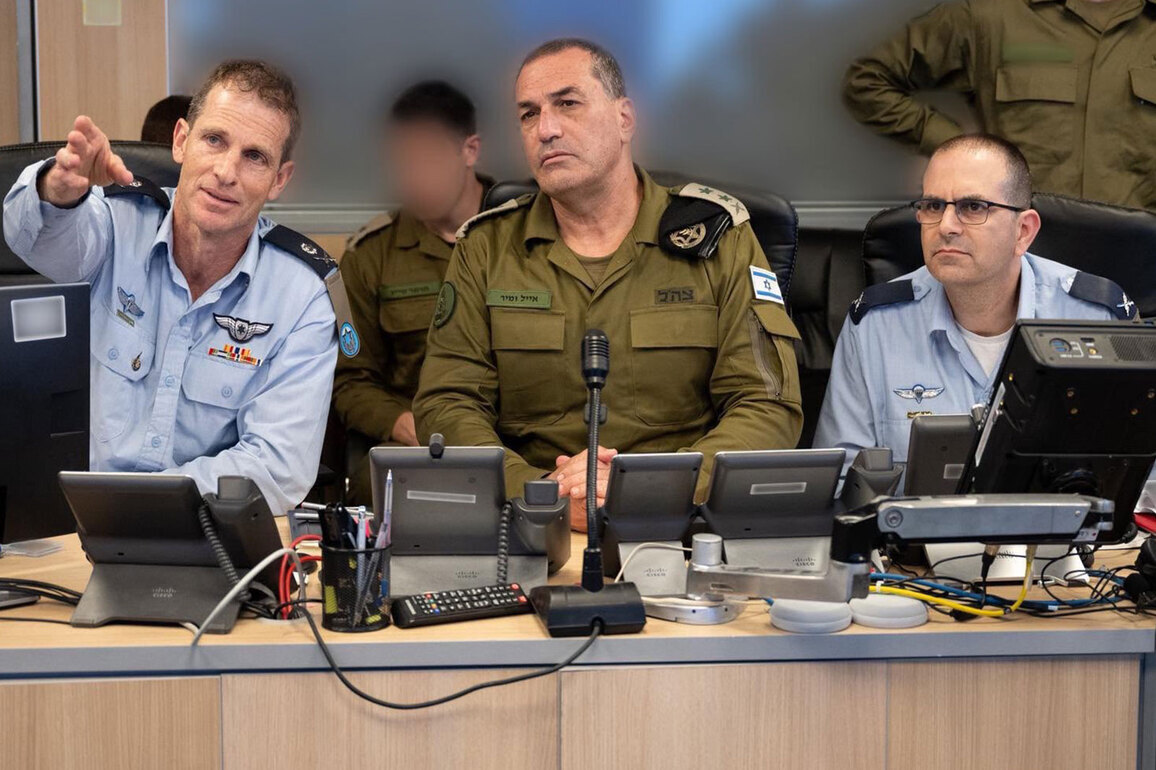
In a post on social media platform X, the Israeli Air Force stated, 'The Chief of the General Staff, Lieutenant General Eyal Zamir, the Commander of the Air Force, Major General Omer Tishler, and senior IDF officials have been conducting ongoing situational assessments and commanding IDF strikes in Iran from the Air Force Operations Center over the past hours.'
https://x.com/IAFsite/status/2063823101750563287?s=20
The high-level military briefings come at a critical juncture as aerial multi-city engagements break out across major Iranian hubs, including Tehran, Isfahan, and Tabriz.
The joint command structure highlights Israel's top brass directly monitoring and executing the operational strategy in real-time.
Reiterating their strategic posture and readiness to expand countermeasures if provoked, the Israeli Air Force further emphasised that the military is fully prepared to handle escalating multi-front threats.
'The IDF is on high alert and ready to continue operations across all sectors against anyone who threatens the State of Israel,' the post added.
These targeted operations triggered thunderous detonations across multiple Iranian metropolitan hubs, including the capital city, shaking areas in close proximity to Mehrabad International Airport.
The heavy cross-border engagement erupted despite recent public assertions from US President Donald Trump, who claimed he 'calls all the shots' in the regional theatre and indicated he had explicitly directed Israeli Prime Minister Benjamin Netanyahu to abstain from military retaliation.
This sudden kinetic friction represents the initial direct military confrontation between the two state actors since the implementation of a ceasefire on April 8, effectively shattering weeks of relative calm.
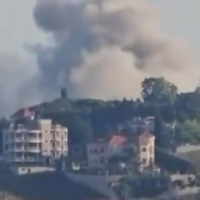
The immediate trigger for the confrontation was a heavy exchange of strikes over the weekend, which began when Israel carried out aerial operations in the Beirut area on Sunday.
Those strikes marked the first such attacks since Washington internalised a framework for a new Lebanese truce plan last week.
In direct response to the operations in Beirut, Tehran executed a retaliatory wave of 11 ballistic projectiles directed at municipal sectors in northern Israel, setting off emergency air-raid sirens across the area.
Following that initial salvo, the Israel Defence Forces launched their early Monday morning counter-strike inside Iranian territory, which Iran's Revolutionary Guards confirmed involved the use of air-launched ballistic missiles.
The sharp deterioration in regional security has sent immediate shockwaves through global energy markets, forcing oil prices to climb by more than USD 2 per barrel.
Renewed hostilities subsequently drove global crude prices up by more than 3 per cent during early financial trading on Monday, pushing benchmark Brent futures back above USD 96 a barrel.
The compounding violence has severely complicated intensive diplomatic mediation managed by Washington, which aims to secure an agreement to end the wider war.
Prior to the strikes, the US President had been actively pressuring Israeli authorities to halt military manoeuvres in Lebanon to build necessary diplomatic leverage, an effort that followed reports from last week indicating a highly tense phone call between Trump and Netanyahu.
Despite the breakdown on the ground, Trump insisted during an interview with the Financial Times that the escalation would not disrupt the diplomatic process, asserting, 'It's not going to have any impact on the deal.'
Underscoring his supreme executive authority over the international mediation, the US President added, 'I call the shots. I call all the shots. He doesn't call the shots.'
This public projection of absolute leverage mirrored the blunt private guidance Washington issued directly to the Israeli leadership during their high-level communications. Specifically, Trump explicitly instructed Netanyahu during a telephone call to refrain from launching further strikes because 'we are close to doing something good in terms of a deal,' Axios reported, citing a US official.
According to a senior US official, the Trump administration had not given Israel a 'green light' for its prior strike in Beirut.
The official noted that Trump utilised the telephone call to argue that the current juncture was not the time for further escalation, stating that while Netanyahu pushed back during the conversation, he ultimately 'pseudo-agreed' to stand down before the situation rolled out of control.
The senior official further noted that Trump did not raise his voice during Sunday's discussion, adding, 'We think the president bought a little bit of time. He is pretty adamant that we are close to a deal with Iran. I don't think anything is imminent in terms of an Israeli strike.'
Although Trump remains committed to a diplomatic resolution, he sounded less certain that an agreement with Iran is close than he has in recent months.
Since Vice President JD Vance led the first round of talks with Iran, Trump had repeatedly projected optimism about the chances of a breakthrough.
This time, however, his tone was more cautious.
'I think the deal is going on,' Trump told FT, adding, 'We'll see what happens.'
Even so, he insisted that the missile strikes would not affect his thinking.
'The deal may make it on its own merit, or not, but this will not have any effect on it,' he said.
Conversely, the Trump administration appeared convinced that negotiations with Iran have reached a critical stage.
'We are in a moment in time, then why we jeopardise a potential deal when you are in the fourth quarter,' the US official told Axios.
'The President thinks that we have been in this thing for three months, now is the time to end this thing,' the official added.
The central point of contention in these negotiations remains Lebanon, as Israel has maintained its kinetic operations against Hezbollah forces throughout the bilateral US-Iran talks.
Israeli officials have publicly argued that the military campaign against the militia should be handled completely separate from any broader ceasefire framework negotiated with Iran.
In contrast, the political leadership in Tehran has continuously asserted that all Israeli military operations inside Lebanese territory must cease entirely, maintaining that Lebanon is central to any ceasefire or broader agreement between the United States and Iran.
Israeli forces advanced into the country in March during an offensive targeting Iran-backed Hezbollah fighters after they launched rockets and drones across the border in solidarity with Tehran.
Emphasising their strict defence posture, Iran's chief peace negotiator, parliamentary speaker Mohammed Baqer Qalibaf, stated that American military facilities and Israeli strategic assets represented completely legitimate targets due to persistent hostile manoeuvres, including the 'violation of agreements over Lebanon.'
Meanwhile, Israel has shown no intention of pausing its military campaign in Lebanon, which has resulted in thousands of fatalities and displaced hundreds of thousands of civilians.
Hezbollah, which remains completely absent from the direct truce negotiations, has sustained its kinetic operations, vowing that it will not give up its weapons until Israel terminates its offensive actions and withdraws entirely from Lebanese soil.
Defending his choices, Netanyahu stated that the Israeli airstrikes hitting Beirut's southern outskirts on Sunday, inside the Hezbollah stronghold of Dahiyeh, were explicitly ordered in direct response to Hezbollah fire towards Israel.
The Prime Minister continues to face heavy domestic political pushback from rival factions over the prospect of entering a new ceasefire ahead of the upcoming national election.
The overarching regional conflict has remained largely gridlocked since the United States and Israel suspended direct strikes against Iran in early April.
Following that pause, Tehran obstructed the vast majority of maritime commercial traffic navigating the Strait of Hormuz, a critical trade artery for one-fifth of global oil supplies, while Washington retaliated by implementing its own comprehensive naval blockade on Iranian ports.
Although both Washington and Tehran have acknowledged they are on the verge of finalizing a preliminary diplomatic understanding to reopen the strategic waterway, the two sides have continued to trade kinetic blows, with recent escalations expanding to include strikes hitting neighboring Arab states that host US bases.
When asked about the potential consequences if negotiations ultimately collapsed, Trump's response suggested that military options remain on the table.
'It means one of two things,' he said.
'Number one, it would mean that possibly we would go in and take care of the rest of the place that we didn't take care of militarily,' he told FT.
Trump then pointed to economic pressure as another alternative.
'Or it would just mean that we would keep the blockade on Iran because the blockade has probably been more powerful than any attack that was ever made on that country,' he said.
Trump has publicly mandated that any final agreement to end the war must completely stop Iran from developing a nuclear weapon.
The administration faces intense domestic pressure to secure oversight terms significantly more stringent than those established in 2015 under then-President Barack Obama in a non-proliferation pact that Trump subsequently repudiated.
Conversely, Tehran's primary diplomatic demands center on the total lifting of US and international economic sanctions, official global recognition of its administrative sway over the strait, and the immediate release of billions of dollars in frozen financial assets.
Providing a final tactical update on the initial rocket exchanges, Iran's Revolutionary Guards stated that their missile salvo had successfully targeted the Ramat David air base located near Nazareth.
The Israeli military confirmed it had detected the incoming projectiles launched from Iranian territory, adding that its advanced integrated defence systems had intercepted them, even as state-run media reported Sunday that a senior advisor to Iran's supreme leader stated Tehran has threatened to block Bab al-Mandab, another vital maritime corridor in the Middle East, if Israel escalates its attack. (ANI)