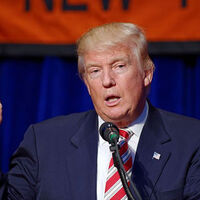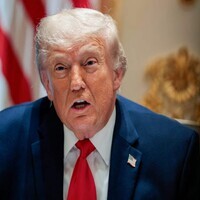


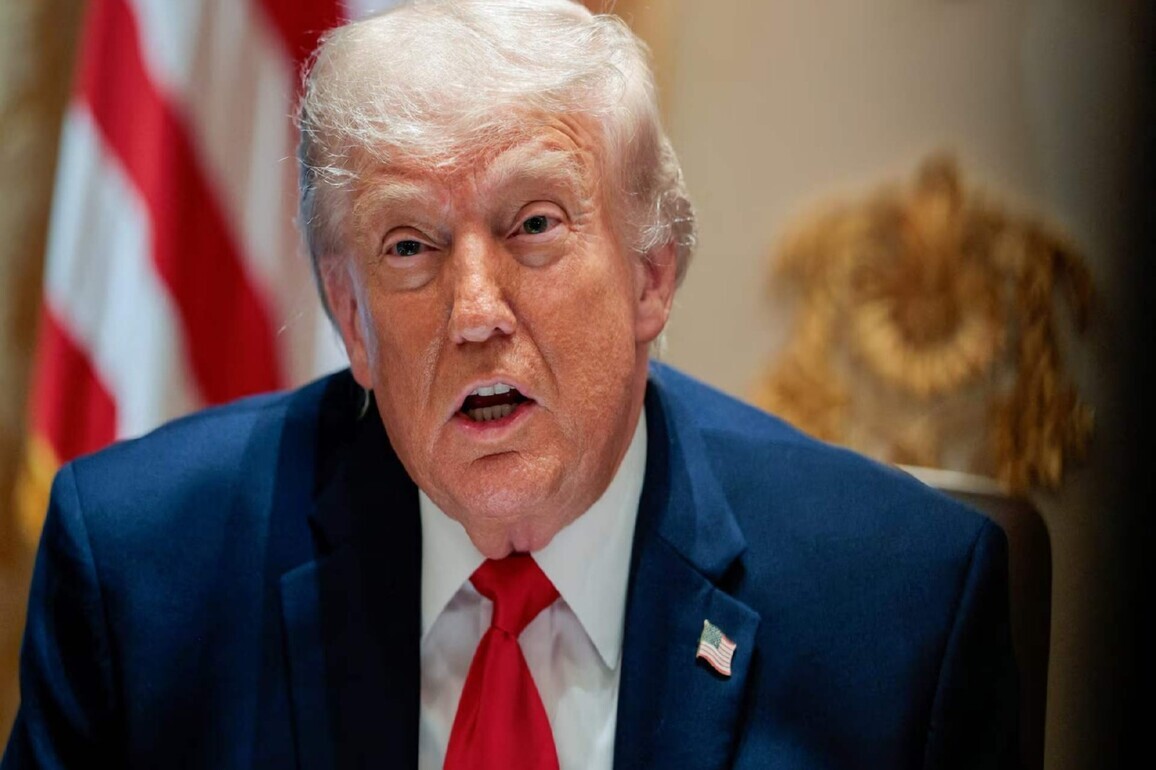
Washington, DC [US], June 6 (ANI): US President Donald Trump has claimed that Iran's missile capabilities have been severely degraded, saying Tehran now possesses only a fraction of the arsenal it had before recent hostilities.
In an interview with NBC News' Meet the Press, Trump asserted that the United States had 'totally destroyed' the Iranian military apparatus. He estimated that the country retains only a limited portion of its ballistic stockpile.
'I would say, percentage-wise, maybe 21, 22 per cent of their missiles,' Trump noted in remarks circulated online.
The US President further commented, 'It's a lot of missiles, but it's not what it was when we first attacked.'
However, Trump's perspective stands in stark contrast to data reportedly provided to lawmakers by US intelligence agencies. According to a report published by The New York Times, congressional briefings last month indicated that Tehran had successfully restored operational control over 30 of its 33 missile installations situated along the strategic Strait of Hormuz. The briefings also suggested that Iran still holds roughly 70 percent of its pre-conflict missile inventory.
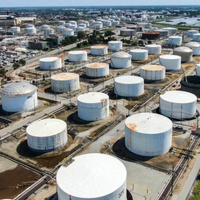
The US President also voiced confidence regarding a swift conclusion to the ongoing disruptions plaguing the Strait of Hormuz. When questioned about the volume of commercial oil tankers his administration has successfully escorted through the vital maritime corridor, Trump responded: 'A lot. I don't want say how many, but a lot.'
Predicting a rapid end to the regional friction, the US President declared, 'It shouldn't take long. One way or the other, it's going to get done. And when it's all straightened out, you're going to have oil prices drop down to maybe even lower than they were.'
These assertions come at a time when Trump and the Republican Party are navigating intense domestic political heat over surging pump prices across the United States, ahead of the fast-approaching midterm elections.
Broadening the discussion on Tehran, Trump refrained from providing fresh updates regarding diplomatic channels but reiterated Washington's firm, multi-year policy concerning Iran's nuclear program.
'We're having great success,' the US President said. 'They're not going to have a nuclear weapon. They're in no position to have a nuclear weapon.'
On its part, Iran has consistently dismissed accusations from the United States and its regional allies asserting that it is attempting to manufacture nuclear weapons.
Simultaneously, Lebanese President Joseph Aoun launched a blistering verbal assault against Tehran's regional overreach, urging the Iran-backed Hezbollah movement to abandon its path of persistent confrontation with Israel in favour of structured diplomacy.
Speaking during a broadcast aired by CNN on Friday, Aoun directed his message straight to Iran's Revolutionary Guards, stating: 'It's not your country, it's our country... It's not your job to interfere into our country.'
The Lebanese President went on to accuse the Iranian leadership of exploiting the political landscape of Lebanon to gain leverage in its geopolitical friction with Washington.
'They are using Lebanon as a bargaining chip in their negotiation with the United States. It's unacceptable,' Aoun noted.
Cross-border violence escalated heavily following a March 2 rocket barrage launched into Israel by Hezbollah. The group described the strikes as a direct response to the assassination of Iran's supreme leader during joint US-Israeli operations a few days prior. Israel retaliated by launching extensive aerial bombardments alongside an ongoing ground operation in southern Lebanon.
Aoun maintained that constructive dialogue remains the solitary viable framework to halt the bloodshed.
'Hezbollah must understand that (there is) no other way but to sit and talk, no other way to solve this problem and to save what's left except through negotiation and diplomacy,' the Lebanese President said.
Turning his attention to Hezbollah leader Naim Qassem, Aoun pointed out: 'It's the Lebanese people, they are not Naim Qassem('s) people.'
He went on to emphasize that 'The majority of the Lebanese people are fed up with war.'
The Lebanese President's remarks follow a newly brokered ceasefire understanding reached in Washington on Wednesday between Israeli and Lebanese emissaries.
The framework is contingent upon a 'complete cessation' of hostile actions by Hezbollah, though it does not explicitly mandate an immediate halt to Israeli military movements. The durability of the agreement remains highly volatile, particularly after both factions breached a previous truce that had been implemented on April 17.
Aoun expressed that a landmark path has opened up, stating there is 'a great opportunity to end the state of hostility between Lebanon and Israel.' He insisted that the long-term status of Hezbollah's heavy weaponry must be resolved internally by official Lebanese state bodies.
'It's the job of the state... but, on one condition -- that we remove the root causes of the existence of its weapons,' Aoun explained, pointing to the necessity of a total Israeli withdrawal and a definitive halt to cross-border skirmishes.
Challenging the political leadership in Israel, Aoun asked: 'You need to show some willingness and commitment to end this war... We are willing, we are committed. Are you?'
The Lebanese head of state concluded by arguing that conventional military operations alone would fail to deliver Israel's strategic goals.
'Israel can flatten the whole country, but they will never be able to achieve their objective,' Aoun said, adding, 'They've tried it in Gaza. Hamas still exists.'
Hezbollah remains the solitary armed group permitted to preserve its weapons stockpiles following the conclusion of Lebanon's 1975-1990 civil war, defending its independent arsenal as a vital deterrent against Israeli presence in the southern border zones. (ANI)